


-
Cine ecuatoriano: 2006 marca el punto de giroPor Joel del RíoEn el capítulo dedicado a Ecuador, del libro Cine iberoamericano: los desafíos del nuevo siglo, escrito por Octavio Getino y publicado recientemente, se asegura que Ecuador produjo, entre 1988 y 1999, un promedio de cuatro largometrajes anuales y que además, importó anualmente 510 películas para su exhibición en salas. Todo ello fue incluido en una encuesta oficial de la UNESCO, sobre las cinematografías nacionales en los años noventa, informe que estaba sujeto a las inexactitudes típicas de las empresas oficiales. No obstante, cierto aire de optimismo se percibía en el cine ecuatoriano entre 2006 y 2007, cuando se anunciaba el acercamiento que se iba a dar entre el Consejo Nacional de Cinematrografía y el Gobierno, reunión que incluyó al vicepresidente de la república, al Ministro de Cultura y a varios cineastas y personas del medio. El objetivo era exponer el apoyo que necesita el CNC para ser incluido en el presupuesto nacional del Estado con el fin de obtener el capital necesario para iniciar sus gestiones de soporte al cine nacional. De este modo, Ecuador dispondría de una Ley de Cine que le permitiría un desarrollo más o menos armónico a este respecto.
El año 2006 parece ser el punto de arrancada, pues fue entonces que se registraron grandes avances en cuanto la legislación ecuatoriana sobre el cine. En el mes de febrero se publicó la Ley de Fomento del Cine Nacional, y el presidente de la República firmó el Decreto Ejecutivo N. 1969, mediante el cual se establecen las disposiciones para la creación, producción, distribución, comercialización, exhibición de películas y otras actividades que buscan fortalecer el desarrollo de la industria cinematográfica, atendiendo la integración y fomento de la misma. Sin este reglamento ese instrumento jurídico no tenía funcionalidad ni consecuencias prácticas. Con la expedición del reglamento se inicia el proceso de constitución del Consejo Nacional de Cine, que está integrado por cuatro delegados del sector público (Presidencia de la República, Instituto Ecuatoriano de Propiedad Intelectual, Ministerio de Comercio Exterior y Casa de la Cultura Ecuatoriana) y tres delegados de las organizaciones profesionales de cineastas (uno de los directores y guionistas, uno de los productores y uno de los actores y técnicos).
El CNC será el encargado de administrar el Fondo de Fomento al Cine Nacional con el fin de apoyar a la producción de manera reglamentada, ya que hasta el momento, todo tipo de auspicios recibidos por las producciones nacionales que se otorgaban desde las instituciones públicas no estaban sujetos a ninguna reglamentación y se asignaban arbitrariamente. La aprobación de este reglamento se produce después de un largo proceso que estuvo liderado por el Colectivo Pro Ley de Cine, en el que unieron esfuerzos Asocine, la Fundación Cero Latitud, la Corporación Cinememoria y Egeda Ecuador, y que ha contado con el compromiso del Ministro de Educación y Cultura, Raúl Vallejo, y del Presidente de la República.
Para acceder a los beneficios que trae consigo esta Ley, toda película deberá pasar por la calificación del Consejo Nacional de Cinematografía siempre y cuando esta cumpla con los requisitos señalados en el artículo 2 de la Ley de Fomento del Cine Nacional:
Artículo 2: Para hacer efectivos los beneficios contenidos en esta Ley, el Consejo Nacional de Cinematografía deberá emitir la correspondiente calificación de película nacional, a las obras cinematográficas, que siendo producidas por personas naturales o jurídicas con domicilio legal en el Ecuador, reúnan por lo menos dos de las siguientes condiciones:
a) Que el director sea ciudadano ecuatoriano o extranjero residente en el Ecuador;
b) Que al menos uno de los guionistas sea de nacionalidad ecuatoriana o extranjero residente en el Ecuador;
c) Que la temática y objetivos tengan relación con expresiones culturales o históricas del Ecuador;
d) Ser realizadas con equipos artísticos y técnicos integrados en su mayoría por ciudadanos ecuatorianos o extranjeros domiciliados en el Ecuador; y,
e) Haberse rodado y procesado en el Ecuador.
Ya se pueden percibir algunos rápidos síntomas del auge que representó esta Ley. En la edición número 47 del Festival Internacional de Cine y Televisión de Cartagena, donde se ha proyectado la participación de 30 productores de 15 países iberoamericanos, se incluyeron tres títulos ecuatorianos junto a exponentes de Argentina, Brasil, Bolivia, Colombia, Chile, Cuba, España, México, Panamá, Perú, Portugal, Puerto Rico, Uruguay y Venezuela. En esa edición se eligieron tres películas ecuatorianas para que participen y a la vez busquen financiamiento. Las películas seleccionadas fueron La muerte de Jaime Roldós, de Manolo Sarmiento y Lisandra Rivera (Corporación Cinememoria); Isla de paz, de Mauricio Samaniego e Isabel Dávalos (Cabezahueca Producciones), y Luca & Lulu, de Michel Latorre, Fernando Vallejo y Diego Darquea (Cineon). Una gran oportunidad constituyó el Festival de Cartagena para estas tres producciones que están buscando camino en un país donde parece que seguirá costando enorme esfuerzo conseguir financiamiento del gobierno para el cine nacional.
Por otra parte, dentro de la reciente animación, también se cuenta el hecho de que en la edición 57 del Festival de Berlín, se exhibieron fuera de competencia tres largometrajes ecuatorianos: Qué tan lejos, de Tania Hermida; Esas no son penas, de Anahí Hoeneisen y Daniel Andrade; y Cuando me toque a mí, de Víctor Arregui. Recientemente el filme Qué tan lejos fue aclamado internacionalmente, pues recibió premios en la categoría de ópera prima en los festivales de Montreal y La Habana, entre otros. La acogida que ha tenido entre los ecuatorianos ha sido sorprendente tomando en cuenta el poco apoyo al cine local. Otras producciones apenas han aparecido en sus periplos internacionales, entre ellas están el documental El Comité, de Mateo Herrera; Cuando me toque a mí, que se presentó en el Festival de Biarritz de Cines y Culturas de América Latina y ganó el premio de actuación masculina para Manuel Calisto. Además, el 25 de mayo de 2006, fue creado el premio cultural Augusto San Miguel con el fin de reconocer los mejores trabajos cinematográficos realizados en Ecuador, se declara el 7 de agosto como Día del Cine Ecuatoriano, y se otorga el primer premio Augusto San Miguel a Víctor Arregui por su filme titulado Cuando me toque a mí.
Manuel Ocaña, español radicado en Guayaquil, presentó en l925 sus primeras Actualidades con reseñas sobre La Revista del Cuerpo de Bomberos, El Trágico encuentro de los pugilistas K.O. Pacheco (peruano) y Tito Simon (ecuatoriano) y las exequias fúnebres de Francisco Urbina Jado (director del poderoso Banco Comercial y Agrícola). En l926 realizó Las olimpiadas de Riobamba, que incluyeron partidos de fútbol entre las ciudades de Ambato, Cuenca, Riobamba, Quito y Guayaquil y “todo cuanto se refería a la práctica olímpica nacional”. En 1928, sus actualidades todavía anunciaban todo tipo de sorpresas.
Aparte de esas experiencias, Augusto San Miguel, dramaturgo y actor, fue el primer director, productor, actor y guionista cinematográfico del Ecuador. Nació en Guayaquil en 1906 y murió muy joven en esta misma ciudad, en 1937. Se sabe que San Miguel colaboró para revistas y periódicos nacionales y extranjeros de esa época. San Miguel era un apasionado del teatro. Comenzó en papeles pequeños y luego funda su propio grupo de teatro. Escribió diversas obras teatrales como El último bohemio (1930), Sombras, Tercer cuartel (1936), Yo no soy comunista, Almas bohemias, entre otras. Sus grandes influencias eran el cine mudo francés, de Hollywood y alemán de los años 20, que pudo conocer durante su estadía en Europa. Fue un gran bohemio y su obra se perdió en algún punto entre sus viajes y aventuras, pero fue capaz de usar la herencia paterna para hacer la primera película de ficción ecuatoriana. El 7 de agosto de 1924, en los teatros Edén y Colón, se estrenó El tesoro de Atahualpa, el primer largometraje de cine mudo con argumento en el Ecuador, “una historia de aventura basada en la popular leyenda sobre el paradero del oro por el que se quería pagar el rescate del emperador inca, y que se cree fue enterrado en territorios desconocidos del país, posiblemente los Llanganates”. El estreno de la película fue un acontecimiento, una novedad en todo el país, de modo que, el mismo año del estreno de El tesoro de Atahualpa, en 1924, San Miguel filmó y estrenó en Quito otra película muda Se necesita una guagua y luego, en 1925, Un abismo y dos almas. A partir de 1924, con tan solo diecinueve años y en el lapso de ocho meses, San Miguel rodó en Guayaquil tres películas de ficción y tres documentales, fundando así lo que la especialista en cine ecuatoriano Wilma Granda llama una Pequeña Edad de Oro del cine ecuatoriano. Lástima que semejante impulso inicial apenas encuentra continuadores, por razones que ha explicado el estudioso Jorge Luis Serrano en sus apuntes El nacimiento de una noción, de 2001.
En el documental Augusto San Miguel ha muerto ayer (2003), del cineasta quiteño Javier Izquierdo, uno de los familiares de San Miguel señalaba que si se desea empezar una búsqueda de las películas del director pionero, probablemente la clave sería el camarógrafo chileno Roberto Saa Silva, quien participó en la grabación de El tesoro de Atahualpa y los otros filmes y que hacía de distribuidor del filme, ya que fue él quien llevó otras copias para las proyecciones en Quito y Cuenca. De este modo comenzó la producción de cine en el Ecuador en los años veinte. Además, en la misma década, el italiano Carlos Crespi dirigió el importante documental Los invencibles shuaras del alto Amazonas.
El advenimiento del cine sonoro, entre 1930 y 1931, detuvo el desarrollo de la industria cinematográfica nacional, que intentó hacer frente a las nuevas películas por medio de la “sonorización en vivo”, es decir, la interpretación de textos y canciones simultáneamente a la proyección, aunque sin éxito. Por eso, durante aproximadamente dos décadas el cine nacional se dedicó a los documentales, los noticieros y los reportajes turísticos promocionales, cuyos principales temas eran Quito, los toros, los aviones e imágenes de guerra, hasta los años cincuenta. En el texto clásico de la historia del cine latinoamericano El carrete mágico (1994), de John King, se le dedica al Ecuador una página, la misma que comienza mencionando a la primera película sonora hecha dentro de las fronteras nacionales, Se conocieron en Guayaquil (1950) del chileno Alberto Santana; cinta que es, para redondear el drama, la única ecuatoriana que el historiador Georges Sadoul hace constar en su Histoire du cinèma mondial (edición corregida y aumentada de 1967).
Como en todos los países del continente, el llamado Nuevo Cine Latinoamericano se hizo sentir en Ecuador, promovido por los intelectuales de izquierda, entre ellos Ulises Estrella, director de la Cinemateca Nacional. Durante ese período proliferaron las coproducciones mexicano-ecuatorianas. Durante la siguiente década, se fortaleció el género documental, y en 1977 se legalizó la Asociación de Autores Cinematográficos del Ecuador. Fecha clave es 1980, cuando se estrenó el cortometraje Los hieleros del Chimborazo (1980) de Gustavo Guayasamín. De inmediato Jaime Cuesta dirigió Dos para el camino, la historia de dos pícaros que recorren el Ecuador en busca de formas fáciles de subsistencia, narrada en corte costumbrista y humorístico.Fue un ejemplo de esta tendencia hacia el desarrollo del cine de ficción la adaptación cinematográfica en 1989 de La Tigra, obra de José de la Cuadra, cuyo director Camilo Luzuriaga, se convertiría en un experto de la adaptación literaria mediante filmes como Entre Marx y una mujer desnuda, a partir de Jorge Enrique Adoum, y de 1809-1810: Mientras llega el día, que relata los aconteceres de la Independencia quiteña. En el American Film Institute Preview, de Washington, escribió Michael Jeck, en enero de 1996: “¿Ha visto una película ecuatoriana últimamente? No lo creo, porque su industria cinematográfica es tal vez la más pequeña de América Latina, y sin embargo ha producido ya al menos un cineasta de clase mundial en Camilo Luzuriaga...una voz única, humorística, sensual, fantástica, tanto como realista y satírica”. Director, productor, fotógrafo, editor y guionista, Luzuriaga nació en 1953, y es uno de los poquísimos ecuatorianos, por no decir el único, que desde hace unos cuantos años está dedicado profesionalmente al cine.
Luzuriaga era aficionado a la fotografía desde la adolescencia. En la Universidad se incorporó a un grupo de teatro y luego devino actor. Posteriormente, abandonó sus estudios y se dedicó enteramente al cine. Fotógrafo desde 1971, llegó a las cinco exposiciones fotográficas individuales y fue el organizador del Primer Encuentro Nacional de Fotografía Contemporánea, en 1982. También fue profesor de fotografía en la Facultad de Artes de la Universidad Central del Ecuador de 1982 a 1987, y de Imagen en la Facultad de Arquitectura y Diseño de la Universidad Católica del Ecuador desde 1994. Sus primeros años como realizador los dedicó al documental (Tierra Cañari, súper-8, 1977, primer premio en la categoría súper-8 en el Concurso Nacional de Cortometrajes, Quito; Don Eloy, 16mm., 1981, segundo premio en el I Festival de Cine Ecuatoriano; codirección y edición de Chacón maravilla, 16mm., 1982, primer premio en la categoría de cine infantil en el Festival de Tampere, Finlandia; Así pensamos, 16mm., 1983, segundo premio en el II Festival de Cine de los Pueblos Indios, Río de Janeiro), hasta llegar a La Tigra, realizada en 35 mm., en 1989, y premiada como la mejor película y mejor ópera prima en el XXIX Festival de Cine Iberoamericano de Cartagena. En la edición francesa del Diccionaire des Filmes (1995) de Larousse el único filme ecuatoriano que consta es La Tigra, que se ubica en el corazón mítico del profundo Ecuador, donde vive la indomable Francisca, conocida por todos como La Tigra; ella es la mayor de tres hermanas huérfanas; un día un curandero negro predice su futuro y les habla de un hechizo, de la salvación por los pecados de las dos hermanas mayores.
A continuación Luzuriaga logra hacer un segundo largo Entre Marx y una mujer desnuda, de 1996, premio Coral a la mejor dirección artística en La Habana y mejor guión y banda sonora en Trieste, Italia. El filme cuenta la atormentada relación de un grupo de jóvenes activistas con su realidad, la filosofía marxista, y el sexo, durante la década del sesenta en Ecuador, cuando la revolución parecía estar a la vuelta de la esquina, y donde todo estaba prohibido, hasta el amor. Posteriormente, Luzuriaga llegaría a ser el productor ecuatoriano de Prueba de vida, 2001, dirigida por Taylor Hackford y protagonizada por Meg Ryan y Rusell Crowe.
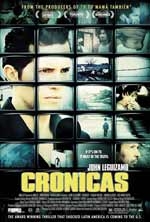
Otros filmes que cabe resaltar por ser hitos en el renacimiento del cine ecuatoriano son Ratas, ratones y rateros (1999) de Sebastián Cordero, ubicada en medio de la miseria urbana del Ecuador, y la historia de Salvador, un joven ladrón envuelto en una espiral de delincuencia cada vez mayor gracias a su primo Ángel, un ex-convicto. La segunda película de Cordero, aún mejor que la primera, se titula Crónicas (2004) y narra la visita de un grupo de periodistas de Miami a una zona marginal del Ecuador. La película está situada en Babahoyo pero podría ser cualquier región pobre del país. El grupo de periodistas lo lidera Manolo Bonilla (el colombiano-norteamericano John Leguizamo), un cazador de noticias de un programa sensacionalista impulsado por hambre de protagonismo, fama y dinero. Junto a él se encuentran su camarógrafo Iván (José Maria Yazpik) y la productora del programa, Marisa (la bella actriz española Leonor Watling). Lo que los ha llevado al Ecuador es el último de los asesinos en serie utilizado por los medios para ganar ratings: el “monstruo de Babahoyo”. En esta ocasión se trata de un asesino de niños. Después del tremendo éxito nacional e internacional de Crónicas, Sebastián Cordero emprendió la preproducción de la película Manhunt, sobre la persecución al asesino de Abraham Lincoln y que se será protagonizada por Harrison Ford.
En el celebrado artículo Ecuador y América Latina ¿Es su cine escaso y de mala calidad?, firmado por Sebastián Cordero, este asegura que “producir cine en el Ecuador es casi un milagro. Con un promedio de un largometraje cada tres años, hablar de una industria cinematográfica ecuatoriana es algo aún muy lejano. No existe ningún tipo de ayuda gubernamental para la producción, lo que dificulta mucho las cosas, pues el cine local no ha podido todavía ser rentable. Ratas, ratones y rateros ha logrado convocar a cerca de 110 000 espectadores en Quito y Guayaquil, con más de quince semanas en cartelera. Esto la convierte no solo en la película ecuatoriana más exitosa de la última década (y posiblemente de la anterior), sino también en una de las diez películas más taquilleras de los últimos años. Sin embargo, a pesar de tener tan buenos resultados y de haber tenido un costo relativamente bajo, inferior a US $ 250.000, la película va a ser un fracaso económico si no consigue una distribución importante en el extranjero, pues el mercado ecuatoriano no logra sustentar por sí solo al cine nacional. Con un boleto de cine que se promedia en menos de un dólar, la situación hoy en día es realmente dramática. A raíz de la terrible devaluación de nuestra ex-moneda el sucre, se ha dado una absurda guerra de precios entre los cines, que ha logrado mantener el boleto en Ecuador como el más bajo de Latinoamérica (excepto tal vez en Cuba), a pesar de tener uno de los porcentajes de asistencia más altos del continente. Al dividir los ingresos entre productor y exhibidor, lo que queda a duras penas cubre una cuarta parte del costo de la película”.
Más adelante asegura el cineasta que “en el caso de Ratas, ratones y rateros, el éxito obtenido en el Ecuador responde a que el público local se vio retratado en la pantalla. Una película puede tener muchos ganchos, y siempre es esencial que el guión y la dirección sean sólidos, al igual que las actuaciones y el lado técnico, pero uno de los mayores atractivos para el espectador es el poder identificarse con personajes y situaciones familiares. (…) No haría cine en mi país si pensara que no hay un futuro positivo para esta industria. Creo que es esencial para todos los países latinos tener material en las pantallas con el que nos identifiquemos y por eso siento una cierta obligación y orgullo por tratar de desarrollar nuestra industria cinematográfica. La competencia es igual de dura en todo el mundo y entrar al mercado norteamericano o europeo no es fácil, ni para los cineastas de esos países. Por naturaleza, el cine implicará siempre un riesgo muy grande, pero el reto está en encontrar la manera de minimizar las posibilidades de fracaso para seguir produciendo y eso se aplica tanto a Ecuador como a Latinoamérica y el resto del mundo”.
Ratas, ratones y rateros en 1999, marca el primer paso de una transformación que comenzaría verificarse en el siguiente lustro. Los ochenta y noventa fueron décadas de incubación, cuya eclosión la inicia la película de Sebastián Cordero. En adelante y comenzado el nuevo siglo encontramos títulos anuales de calidad variable: Sueños en la mitad del mundo (1999) de Carlos Naranjo, Alegría de una vez (2001) de Mateo Herrera, Fuera de juego (2002) de Víctor Arregui, la historia de Juan, un joven ecuatoriano de origen pobre que sueña con emigrar para escapar de la asfixiante situación de su país, y en busca del dinero necesario para hacer realidad su sueño, termina involucrándose en hechos delictivos; Un titán en el ring (2002) de Viviana Cordero, que cuenta la llegada a un pueblo de los Andes de un luchador llamado Argonauta quien trata de dominar el ring, donde se enfrenta con el favorito La bestia loca, y el enfrentamiento causa la división del pueblo; El lugar donde se juntan los polos (2002) dirigida y escrita por Juan Martín, realizada en video digital y que cuenta la historia de Joaquín y Amalia, dos niños ecuatorianos nacidos en París, y su padre les cuenta, a través de esta carta filmada, qué es lo que los liga con la historia reciente de América Latina: 1809-1810: Mientras llega el día (2005) de Camilo Luzuriaga, ambientada en el Quito de esos años, cuando las tropas reales llegan a la ciudad desde Lima con el propósito de sofocar la rebelión de los insurgentes contra la Corona española; en medio de estos acontecimientos surge el amor entre Judit, una joven quiteña, con Pedro Matías Ampudia, el bibliotecario de Quito; Febres en la memoria (2005) de Ivo Huahua, Velasco: retrato de un monarca andino (2006)
El documental El Comité (2006) de Mateo Herrera fue proyectado en la octava edición del BAFICI y en festivales europeos con buenos comentarios, y algo similar ocurrió ese mismo año con Qué tan lejos (2006) de Tania Hermida, filme que luego de dos meses de su estreno había superado los ciento veinte mil boletos en la taquilla nacional. Ambos filmes, sintomáticamente surgidos de la ficción y el documental, abren la brecha para otros títulos ecuatorianos que ya no serán vistos como algo excepcional y exótico, sino a manera de continuidad y sistema. Ecuadorean film: The year 2006 marks a turning point
By Joel del Río
In the chapter dedicated to Ecuador of the book Cine iberoamericano: los desafíos del nuevo siglo, written by Octavio Getino and published recently, it is assured that Ecuador produced, between 1988 and 1999, an average of four annual feature films and that also, imported 510 foreign films annually for their exhibition in movie theaters. Everything was included in an official survey of UNESCO, about the national films in the 1990s, inform that was subjected to the typical inaccuracies of the official companies. Nevertheless, a certain air of optimism was perceived in the Ecuadorian film between 2006 and 2007, as the approach that will occur between the film National Council and the Government was announced. The meeting included the vice-president of the Republic, to the Minister of Culture, several filmmakers and people of the media. The objective was to expose the support that CNC needs to be included in the national State budget with the purpose of obtaining the necessary resources to begin its managements of support to the national cinema. In this way, Ecuador would have a film Law that would allow a more or less a harmonic development in this regard.
2006 seems to be the year of takeoff, because it was then when t great advances in regards to Ecuadorian film legislation took place. In the month of February the law for the National Film Development (Ley de Fomento del Cine Nacional) was issued, and the president of the Republic signed the Executive Decree N. 1969, by means of which it was established the dispositions for the creation, production, distribution, commercialization and exhibitions of films and other activities aimed to strengthen the development of the film industry, assisting its integration and development. Without this regulation that juridical instrument did not have neither functionality nor practical results. With the issuing of the regulation begins the process of constitution of the National Film Council integrated by four delegates of the public sector (the Republic President, the Ecuadorian Institute of Intellectual Property (Instituto Ecuatoriano de Propiedad Intelectual), Ministry of Foreign Trade (Ministerio de Comercio Exterior) and the Casa de la Cultura Ecuatoriana (Ecuadorian Culture House) and three delegates of the professional filmmaker organizations (one of the directors and screenwriters, one of the producers and one of the actors and technicians).
CNC will be the one in charge of the management of the Fund of Development to the National Film (Fondo de Fomento al Cine Nacional) with the purpose of support the film production on a regulated basis, because until the moment, all kind of support received by the national film productions granted from the public institutions were not subjected to any regulation and they were assigned arbitrarily. The approval of this regulation takes place after a long process that was led by the Collective Pro Film Law (Colectivo Pro Ley de Cine ), in which joined efforts Asocine, la Fundación Cero Latitud (the Zero Latitude Foundation), the Cinememoria Corporation and Egeda Ecuador, and which has accounted with the commitment of the education and culture minister, Raúl Vallejo, and the Republic President.
To be able to accede to the benefits that brings this Law, all films should pass by the the qualification of the National Film Council and it has to fulfill the requirements pointed out in the article 2 of the law for the National Film Development.
Article 2: To make effective the benefits which are contained in this Law, the National Film Council should emit the corresponding qualification of national film, to the film works that being produced by natural or juridical people with legal home in Ecuador, it should comply at least two of the following conditions:
a) That the director be a native from Ecuador or a residing foreigner;
b) That at least one of the screenwriters be native from Ecuador or a residing foreigner;
c) That the theme and objectives have a relationship with cultural or historical Ecuador expressions;
d) That the film be made with artistic and technical teams integrated in their majority by Ecuadorian people or foreigner people domiciled in Ecuador; and
e) The film should have been shot and postproduced in Ecuador.
It could already be perceived some quick symptoms of the growing that represented this Law. In the 47th edition of the Cartagena International Film and Television Festival of (Festival Internacional de Cine y Televisión de Cartagena) where participated 30 producers from 15 Ibero-American countries, three Ecuadorian titles were included together with exponents from Argentina, Brazil, Bolivia, Colombia, Chile, Cuba, Spain, Mexico, Panama, Peru, Portugal, Puerto Rico, Uruguay and Venezuela. In that edition were chosen three Ecuadorian films in order to participate and at the same time look for funding . The chosen films were La muerte de Jaime Roldós by Manolo Sarmiento and Lisandra Rivera (Cinememoria corporation); Isla de paz by Mauricio Samaniego and Isabel Dávalos (Cabezahueca Productions), and Luca & Lulu by Michel Latorre, Fernando Vallejo and Diego Darquea (Cineon). A great opportunity constituted the Cartagena Festival for these three productions that are looking for road in a country where it seems that it will continue costing enormous effort to get the government's financing for the national film.
On the other hand, within the recent animation, could be considered the fact that in the edition 57 of the Berlin Festival were exhibited out of competition three Ecuadorian feature films: Qué tan lejos by Tania Hermida; Esas no son penas by Anahí Hoeneisen and Daniel Andrade; and Cuando me toque a mi by Víctor Arregui. Recently the film Qué tan lejos was acclaimed internationally, because it received awards in the first work category at Montreal and Havana Festivals among others. The favorable reception that has had among the Ecuadorians has been surprising taking into account the little support to the local film. Other productions have hardly appeared in the international film sphere, among them they are the documentary El Comité by Mateo Herrera; Cuando me toque a mí, which was showed in the Biarritz Festival of Latin American Film and Culture and won the prize of masculine performance for Manuel Calisto. Also, on May 25, 2006, it was created the cultural prize Augusto San Miguel with the purpose of recognizing the best film works which were made in Ecuador, it wass declared August 7 as Day of the Ecuadorian Cinema, and the first prize Augusto San Miguel was granted to Victor Arregui by his film titled Cuando me toque a mí.
Manuel Ocaña, Spaniard living in Guayaquil, presented in l925 his first news with reviews of the Fire Brigade, The Tragig Encounter of the fighters K.O. Pacheco (Peruvian) and Tito Simón (Ecuadorean) and The Funerals of Francisco Urbina Jado (director of the powerful Commercial and Agricultural Bank). In l926, he made Las olimpiadas de Riobamba which included soccer games among the cities of Ambato, Cuenca, Riobamba, Quito and Guayaquil and "everything about the national Olympic practice". By 1928 his newsreels still announced all kinds of surprises.
Apart from those experiences, other important figure was Augusto San Miguel, playwright and actor, the first film director, producer, actor and screenwriter from Ecuador. He was born in Guayaquil in 1906 and he died very young in this same city in 1937. It is known that San Miguel collaborated for national and foreigner magazines and newspapers of that time. San Miguel was an enthusiast of the theater. He began in small roles and then he founded his own theater group. He wrote diverse theater plays as El último bohemio (1930), Sombras, Tercer cuartel (1936), Yo no soy comunista, Almas bohemias, among other. His big influences were the silent French film, the Hollywood and German film of the 1920s that he could know when he was in Europe. He was a great bohemian and his work got lost in some point between his trips and adventures, but he was able to use the paternal inheritance to make the first Ecuadorian feature film. On August 7, 1924, in the theaters Edén and Colón, it was released El tesoro de Atahualpa, the first silent feature film with argument in Ecuador, "an adventure story based on the popular legend about the place where was the gold for which they wanted to pay the Inca emperor's rescue, and that it is believes, it was buried in unknown territories of the country, possibly Llanganates." The premiere of the film was an event, a novelty in the whole country, so, the same year of the premiere of El tesoro de Atahualpa, in 1924, San Miguel filmed and released in Quito another silent film Se necesita una guagua and then, in 1925, Un abismo y dos almas . Starting from 1924, with only nineteen years and in the lapse of eight months, San Miguel shot in Guayaquil three feature films and three documentaries, founding this way what the Ecuadorian film specialist Wilma Granda calls a Small golden Age of the Ecuadorian film. It is a pity that such an initial impulse hardly finds continuators, for reasons that the scholar Jorge Luis Serrano has explained in his notes El nacimiento de una noción (2001).
In the documentary Augusto San Miguel ha muerto ayer (2003), of the Quitoborn filmmaker Javier Izquierdo, one of San Miguel's relatives pointed out that if it is wanted to begin a search of the film of this pioneer, the key would be probably the Chilean cameraman Roberto Saa Silva who participated in the recording of El tesoro de Atahualpa and the other films and that he also made as film distributor, since it was him who took other copies for their projections in Quito and Cuenca. This way the film production began in Ecuador in the 1920s. Also, in the same decade, the Italian Carlos Crespi directed the important documentary Los invencibles shuaras del alto Amazonas.
The advent of the sound film, between 1930 and 1931, stopped the development of the national film industry that tried to face up the new films by means of the "live sound" that means the interpretation of texts and songs simultaneously to the projection, something that tuned out to be unsuccessful. For that reason, for approximately two decades the national film was devoted to the documentaries, the news and the promotional tourist reports whose main topics were Quito, the bulls, the airplanes and war images until the 1950s. In the classic text of the Latin American film history named The Magic Reel (1994) by John King, there is a page dedicated to Ecuador, the same one that begins mentioning the first sound film made inside the national frontiers, Se conocieron en Guayaquil (1950) by the Chilean Alberto Santana; that it is the only Ecuadorean film that the film historian Georges Sadoul account for in his book Histoire du cinèma mondial (1967 revised and expanded edition).
As in all the countries of the continent, the presence of the so call New Latin American Cinema was also felt in Ecuador, promoted by the left intellectuals, among them Ulises Shatters, director of National Film Archive. During that period the Mexican-Ecuadorian coproductions proliferated. During the following decade occured a strengthening of the documentary genre, and in 1977 the Association of Film Authors from Ecuador was legalized. The key date is 1980, when it was released the short film Los hieleros del Chimborazo (1980) of Gustavo Guayasamín. Immediately Jaime Cuesta directed Dos para el camino, the story of two scamps that travel through Ecuador in search of easy ways of subsistence, narrated with a local customs and humorous tone.
An example of this tendency toward the development of the narrative film was the adaptation in 1989 of La Tigra, a work by José de la Cuadra, directed for the screen by Camilo Luzuriaga, who would become himself an expert in literary adaptation with films as Entre Marx y una mujer desnuda, based on a work by Jorge Enrique Adoum, and 1809 -1810: Mientras llega el día, which relates the events of the Quito Independence. In the American Film Institute Preview of Washington, Michael Jeck wrote in January 1996: “Have you seen an Ecuadorean film recently? I do not believe it, because its film industry is perhaps the smallest in Latin America, and however it has already produced at least a film director of world class in Camilo Luzuriaga...a unique, humoristic, sensual and, fantastic voice, as well as realist and satirical." Director, producer, photographer, editor and screenwriter, Luzuriaga was born in 1953, and he is one of the very few Ecuadorian filmmakers, if not the only one, professionally dedicated to the cinema for some years.
Luzuriaga was fond of the photography since he was an adolescent. At the University, he joined a theater group and then he became an actor. Later on, he abandoned his studies and he devoted entirely to the cinema. Photographer from 1971, he managed five individual photographic exhibitions and he was the organizer of the First National Encounter of Contemporary Photography in 1982. Luzuriaga was also photography professor in the Arts Faculty of the Central University of Ecuador from 1982 to 1987, and of Image in the Architecture and Design faculty of the Catholic University of Ecuador since 1994. He dedicated his first years as filmmaker to the documentary (Tierra Cañari, super-8, 1977, first prize in the super-8 category in the National Short Film Competition, Quito; Don Eloy, 16mm., 1981, second prize in the 1st Ecuadorian Film Festival; Chacón Maravilla, as co-director and editor, 16mm., 1982, first prize in the children category in the Tampere Film Festival in Finland; Así pensamos, 16mm., 1983, second prize in the 2nd Indigenous People Film Festival, Río de Janeiro), until arriving to La Tigra, filmed in 35 mm in 1989, and awarded best film and first work in the 29th Ibero-American Film Festival of Cartagena. In the French edition of the Diccionaire des Filmes (1995) of the Larousse publishing house the only Ecuadorian film that appears is La Tigra, a film set in the mythical heart of the deep Ecuador, where lives the indomitable Francisca, who is known by every body as La Tigra; she is the eldest of three orphan sisters; one day a black magic healer predicts their future and tells them about a spell, about the salvation for the sins of the two eldest sisters.
Next Luzuriaga was able to direct a second feature film Entre Marx y una mujer desnuda (1996), Coral award for best art direction at International Festival of the New Latin American Cinema of Havana and the best screenplay and soundtrack in Trieste, Italy. The film tells about the tormented relationship of a group of young activists with their reality, the Marxist philosophy, and the sex, during the 1960s decade in Ecuador, when the revolution seemed to be at the turn of the corner, and where everything was forbidden, even love. Later on, Luzuriaga would be the Ecuadorian producer of Prueba de vida, 2001, directed by Taylor Hackford and played by Meg Ryan and Rusell Crowe.
Other films that are necessary to stand out because they are landmarks in the rebirth of the Ecuadorian cinema are Ratas, ratones y rateros (1999) by Sebastián Cordero (1999), which takes place in the middle of Ecuador urban poverty, and tells the story of Salvador, a young thief wrapped in a spiral of crime every time bigger thanks to his cousin Ángel, a former-convict. Cordero´s second film, even better than the first one, is Crónicas (2004) and it narrates the visit of a journalist group from Miami to a marginal area of Ecuador. The film is located in Babahoyo but it could be in any poor region of the country. The journalist group is led by Manolo Bonilla (the Colombian-American actor John Leguizamo), a news hunter of a sensationalist program who is impelled by hunger of prominence, fame and money. Next to him is his cameraman Iván (José María Yazpik) and the program producer, Marisa (the beautiful Spanish actress Leonor Watling). The fact that has taken them to Ecuador is the most recent of a serial killers used by the media to win ratings: the "Monster of Babahoyo." In this case the killer is a children murderer. After the tremendous national and international success of Crónicas, Sebastian Cordero undertook the pre-production of the film Manhunt, about the persecution of the assassin of Abraham Lincoln with Harrison Ford in the leading role.
In the celebrated article Ecuador y América Latina ¿Es su cine escaso y de mala calidad?, ( Ecuador and Latin America. Is their cinema scarce and of bad quality?, English translation of the Spanish title), signed by Sebastian Cordero, it is assured that to "produce film in Ecuador is almost a miracle. With an average production of a feature film every three years, to speak of an Ecuadorean film industry is something even something remote. There is not any kind of governmental support to the film production, which hinders film production a lot, because the local cinema has not managed to be profitable. Ratas, ratones y rateros has been able to summon nearly 110 000 spectators in Quito and Guayaquil, with more than fifteen weeks in the box-office. This is not only became the most successful Ecuadorian film of the last decade (and possibly of the previous one), but also it is one of the most successful film at the box-office in many years. Nevertheless, in spite of having such a good commercial results and a relatively low cost, less than $ 250.000, US dollars the film would become an economic failure if it does not get an important distribution abroad, because the Ecuadorian market is not able to sustain by itself the national film production. With a film ticket of an average price of less than a dollar, the situation nowadays is really dramatic. Soon after the terrible devaluation of our former-currency the sucre, an absurd war of prices has begun among the movie theaters, which has make possible to keep the ticket prices in Ecuador as the lowest in Latin America (except perhaps in Cuba), in spite of having one of the highest percentages of film attendance in the continent. When dividing the revenues between producer and exhibitor, what is left cover hardly cover a quarter of the film cost "
Further on, the filmmaker assures that "in the case of Ratas, ratones y rateros, the success attained in Ecuador responds to that the local public saw themselves represented on the screen. A film could has many attractive elements, and it is always essential that the screenplay and the film direction be solid, as well as the performances and the technical aspect, but one of the greatest appeal for the spectators is the possibility of identifying themselves with the characters and familiar situations. (...) I would not make film in my country if I thought that there is not a positive future for this industry. I believe that it is essential for all the Latin countries to have themes on the screens with which we can identify ourselves, and for that reason I feel a certain obligation and for trying to develop our film industry. The competition is equally hard in the whole world and to enter the North American or European market is not easy, nor even for the native filmmakers from these own countries. For its own nature, the film will always imply a very great risk, but the challenge is to find the way to minimize the possibilities of failure in order to continue producing films and this is valid as much for Ecuador as for Latin America and the rest of the world."
Ratas, ratones y rateros in 1999, marks the first step of a transformation that would begin to take place in the next lustrum. The 1980s and 1990s were decades of incubation, which emerges with precisely with Sebastian Cordero´s film. From this moment on, and with the beginning of a new century, we find annual film titles of variable quality: Sueños en la mitad del mundo (1999) by Carlos Naranjo, Alegría de una vez (2001) by Mateo Herrera, Fuera de juego (2002) by Víctor Arregui, the story of Juan, a poor Ecuadorean young boy who dreams of emigrating to escape from the suffocating situation of his country, and in search of the necessary money to make his deams came true, he ends being involved in crime; Un titán en el ring (2002) by Viviana Cordero which tells the arrival to an Andes’s town of a fighter called Argonaut who tries to dominated the ring, where he faces with the favorite one La Bestia Loca (The Crazy Beast), a fight that causes the town division; El lugar donde se juntan los polos, (2002) directed and written by Juan Martin and made in digital video, tells Joaquín and Amalia´s stories, two Ecuadorean children who were born in Paris, and their father tells them, through this filmed letter, what links them to the recent history of Latin America; 1809-1810: Mientras llega el día (2005), by Camilo Luzuriaga, is set in the Quito of the year of the title, when the real troops arrive to the city from Lima with the intention of suffocating the uprising of the rebels against the Spanish Crown; Amid these events arises the love between Judit, a young girl from Quito, with Pedro Matías Ampudia, a librarian of this city; Febres en la memoria (2005) by Ivo Huahua, Velasco: Retrato de un monarca andino (2006).
The documentary El Comité (2006) by Mateo Herrera was screened in the 8th edition of the BAFICI and in European festivals with good reception of the critic, and something similar happened that same year with Qué tan lejos (2006) by Tania Hermida, film that after two months of its premiere had overcome the 200 thousand tickets in the national box office. Both films, symptomatically arise from the fiction and the documentary, break through for other Ecuadorean film titles that will no longer be seen as something exceptional and exotic, but as a continuation and a system.